Chapter 13: Faiths and traditions · Part 10
Sikhism
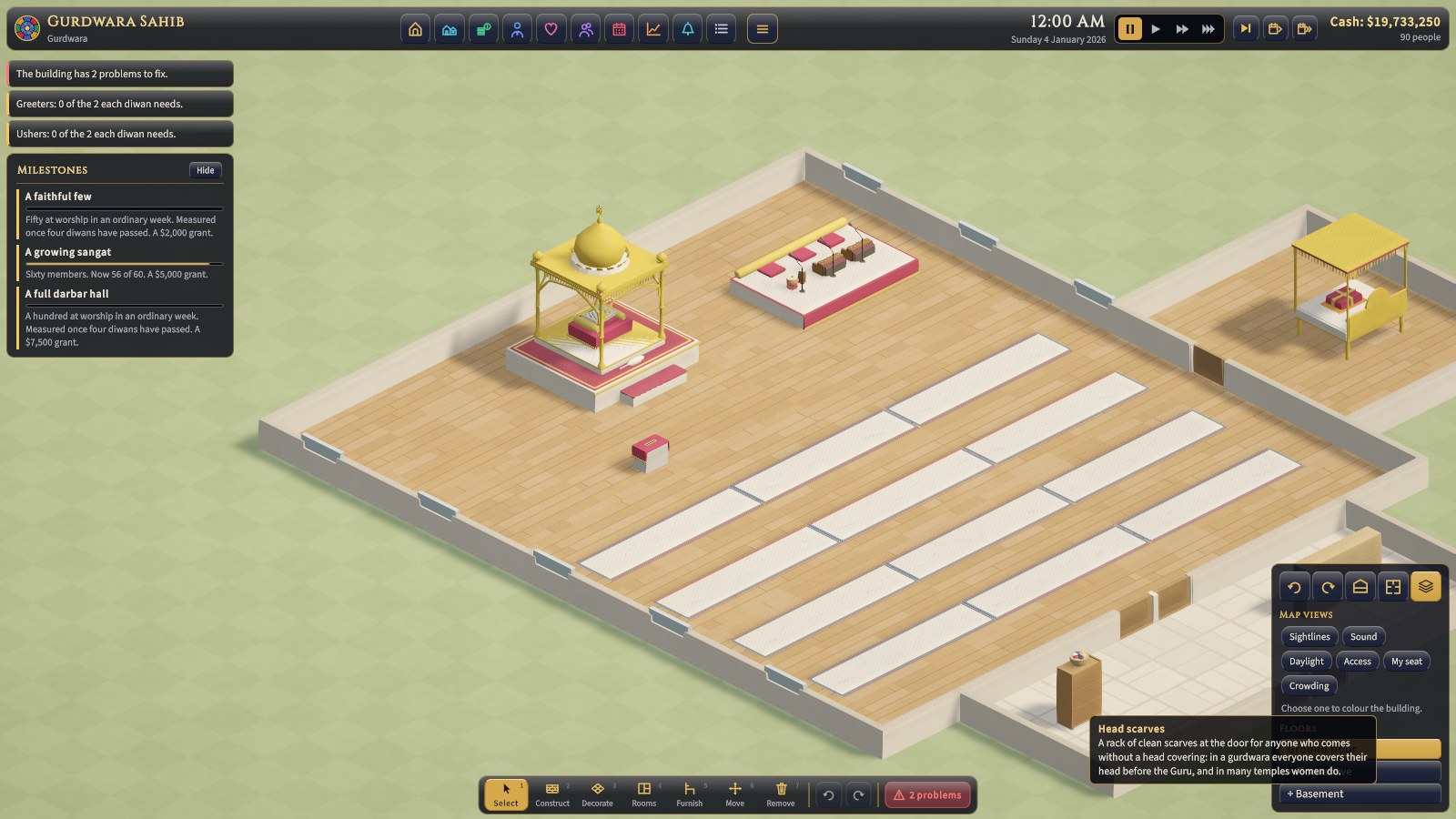
One tradition, the gurdwara, as most American Sikhs know it. At its centre is the Guru Granth Sahib, the scripture Sikhs hold to be their living Guru: opened each dawn on the palki under its canopy, with everyone sitting on the floor below it, and carried at night to its own room, the sachkhand, to rest. Heads are covered and shoes come off, and no meat, eggs, alcohol, or tobacco come onto the premises. The doors stand open to anyone, and langar, free vegetarian food, is served to everyone who comes.
Gurdwara its page →
An independent, mostly Punjabi sangat, run by an elected committee. Prakash and Asa di Var at five in the morning, Rehras at sunset, and Kirtan Sohila as the Guru Granth Sahib is laid to rest, with the doors open from half past seven to seven for anyone to come and bow. The main gathering, moved to Sunday in America, is the diwan, from nine until two with people coming and going: the Sukhmani Sahib, kirtan by hired ragis to harmonium and tabla, the katha, the Ardas, the hukamnama, and karah prashad; then langar, cooked by volunteers and sponsored by a family, eaten sitting in rows on the floor. On the other days a smaller langar is served from noon within the open hours, for whoever is there: the week's sponsor pays for it, and the sponsor and the langri cook it before any volunteer is asked (Worship and the year). A sevadar sits behind the Guru Granth Sahib while it's open. Families ask for an Akhand Path, 48 hours of unbroken reading in relays ($501), and for a Sehaj Path at home; the gurpurabs are marked the same way. The variants are a gurdwara keeping the SGPC's calendar, and a Sikh Dharma gurdwara of mostly American-born converts, whose standing many Punjabi Sikhs dispute, as its description says.
- Required: the palki, a sachkhand with its sukhasan bed, the Nishan Sahib on the grounds, floor sheets, head scarves, a shoe rack, and a kitchen.
- Expected: the Golak, a kirtan stage, and pangat mats for langar. Forbidden: Oak pew. Pianos, organs, and drums are discouraged.
- Fits best: the palki, golak, kirtan stage, Nishan Sahib, floor sheets, pangat mats, head scarves, and shoe rack (+0.5); stained glass, pillars, the dome, and formal items (+0.33). The pipe organ −0.33, drums and the sound system −0.5; pianos, the electronic and Hammond organs, and handbells −1; chairs and the screen 0.
The parbandhak committee, elected by the General Body members, hires and dismisses the granthi (often brought from Punjab on a religious-worker visa, and housed), and decides small purchases and renovations; the members vote on new building. Its elections are fought between slates, and sometimes end in court or in a new gurdwara. Any Sikh may read or lead the Ardas, women as well as men. The Akal Takht in Amritsar is the seat of Sikh authority, but has no say in a gurdwara's affairs here: nothing is owed, and there's nothing to leave. Dasvandh, the tenth, is taught; the golak and the families' sponsorships pay the bills. The women's istri satsang forms once six could belong (not at a Sikh Dharma gurdwara, whose women lead in the diwan itself). Find langar cooks before anything else: a Sunday crowd of 200 needs five.