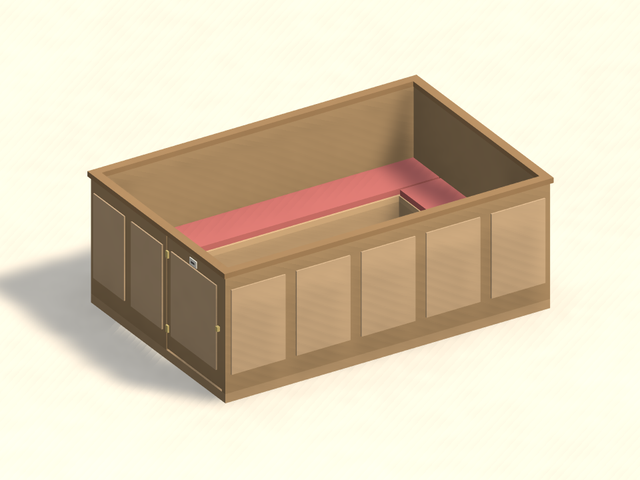
An enclosed pew with panelled sides and its own door, as Georgian churches rented to families. Seats eight.
Footprint
3 × 2 m
Seats
8
Upkeep
$30 a year
Looks
7 / 10
Traits
cherished after a year
Across the 80 traditions: suits 45, jars with 35.
Choir stalls $3,000
Carved stalls where the choir sits together facing across the chancel.
Footprint
3 × 1 m
Seats
6
Upkeep
$25 a year
Looks
7 / 10
Offered to
Christian traditions
Expected by Lutherans and the Orthodox, and needed (or a choir loft) to start a choir ministry. Seats the choir, not the congregation. Quakers discourage them.
Across the 44 Christian traditions: suits 20, jars with 23, neutral to 1, 12 expected, 9 discouraged.
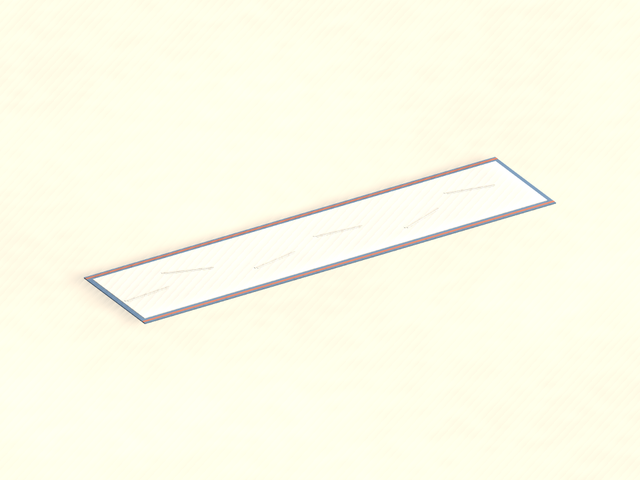
Floor sheets $300
White sheets spread over durries on the carpet, four metres of them: room for eight to sit cross-legged on the floor, as people do in a mandir, a gurdwara, or a derasar. Shoes stay at the door.
Footprint
4 × 1 m
Seats
8
Upkeep
$60 a year
Looks
3 / 10
Offered to
Hindu and Sikh and Jain traditions
Traits
floor seating: people sit on it, and its seats count as seats
Building fit
counts in its own faiths' traditions where their rules name it (+0.5 expected or required, −1 discouraged or forbidden); otherwise left out
White sheets or durries, 4 m long, with room for eight: floor seating for Hindu, Sikh, and Jain congregations, counted as seats. Required at a gurdwara, where pews are forbidden, and at Jain Vishva Bharati. The cheapest seat in the game.
Across the 13 Hindu and Sikh and Jain traditions: suits 4, jars with 0, neutral to 9, 2 required, 2 expected.
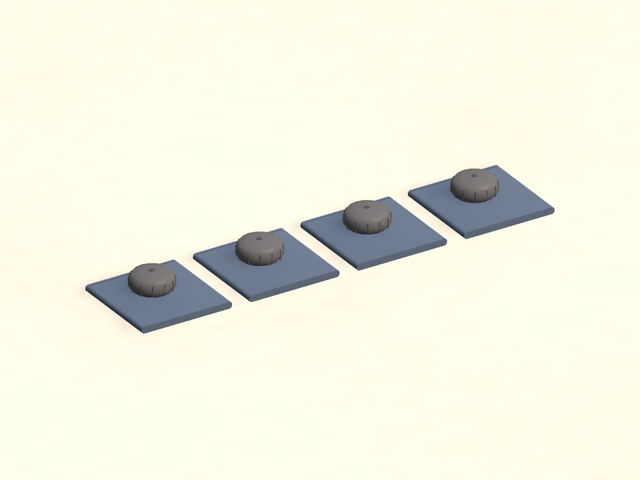
Meditation cushions $600
Four round zafu on square zabuton mats, in a row: sit cross-legged or kneel, back straight, and be still. Shoes stay at the door.
Footprint
4 × 1 m
Seats
4
Upkeep
$40 a year
Looks
4 / 10
Offered to
Buddhist traditions
Traits
floor seating: people sit on it, and its seats count as seats
Building fit
counts in its own faiths' traditions where their rules name it (+0.5 expected or required, −1 discouraged or forbidden); otherwise left out
Zafu and zabuton, four to a row: floor seating, counted as seats. Required where worship is meditation (a Zen center), which discourages pews. A shoe rack is expected wherever a Buddhist temple sits on the floor.
Across the 7 Buddhist traditions: suits 1, jars with 0, neutral to 6, 1 required.
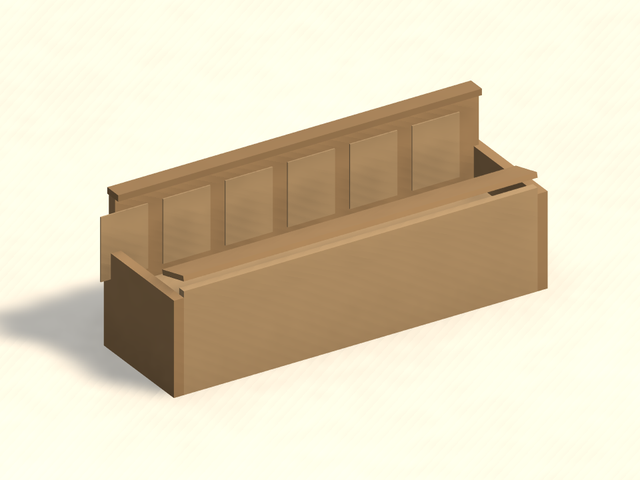
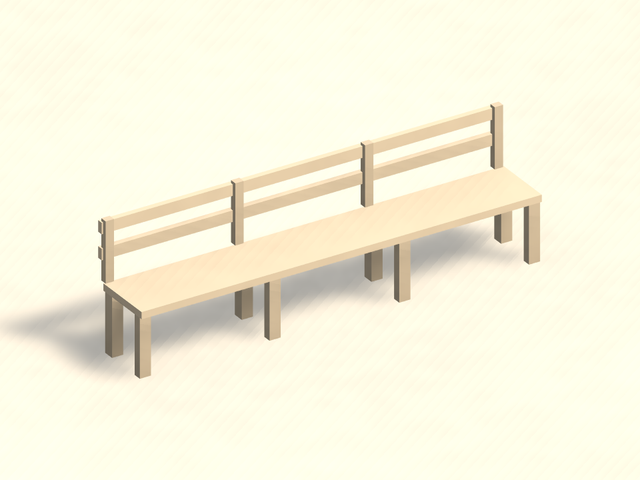
Meeting bench $900
A plain wooden bench seating five, arranged to face the other benches.
Footprint
3 × 1 m
Seats
5
Upkeep
$10 a year
Looks
4 / 10
Building fit
doesn't count (no distinct character)
The Quaker meeting bench, expected in every meeting house. Arrange them in a hollow square facing inward. Neutral for everyone else.
Across the 80 traditions: no fit (it has no particular character), 1 expected.
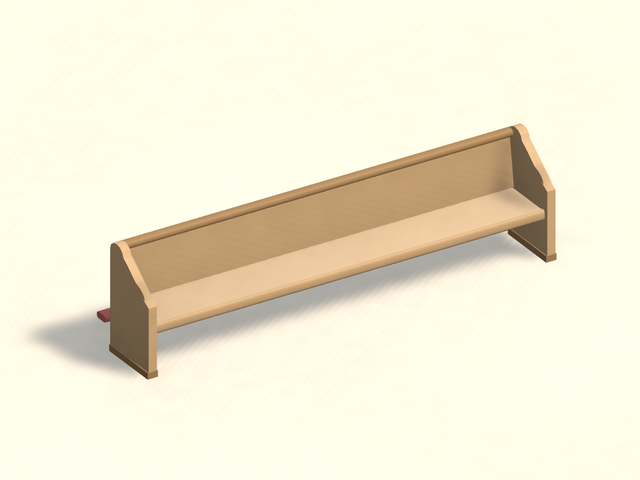
Oak pew $2,400
A 4-metre oak pew seating eight. Pews carry tradition and capacity, and moving them is a fight.
Footprint
4 × 1 m
Seats
8
Upkeep
$20 a year
Looks
6 / 10
Traits
cherished after a year
Building fit
doesn't count (no distinct character)
Eight seats in four metres: the seat of most churches and synagogues, a Shin temple's hondo, a shrine's haiden, a Konko church's worship hall, and a Vedanta Society's chapel. Pews you've had for a year, or that came with the building, become cherished, and taking them out starts a conflict (as a Hindu community that has bought a church finds in the temple-in-a-church scenario, though it passes). Any tradition that prays on the floor discourages them (a mosque, a Zen center, ISKCON, Jain Vishva Bharati), and so do the Orthodox; a gurdwara forbids them, since everyone sits below the Guru Granth Sahib. Still, standing costs far more than a discouraged pew. Pews can be cushioned in eight colours from Church → Church ($320 a pew, +0.02 comfort, replaced at full price every three years).
Across the 80 traditions: no fit (it has no particular character), 1 forbidden, 8 discouraged.
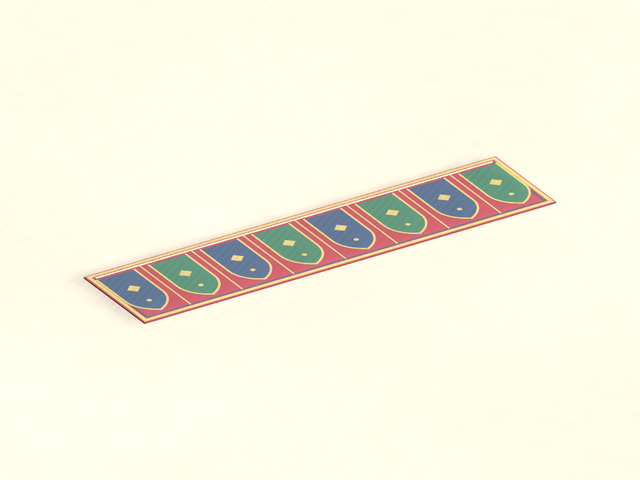
A row of prayer carpet four metres long, woven with arches that point the way to pray: room for eight to stand shoulder to shoulder, bow, and prostrate. Shoes stay off.
Footprint
4 × 1 m
Seats
8
Upkeep
$40 a year
Looks
5 / 10
Offered to
Muslim traditions
Traits
floor seating: people sit on it, and its seats count as seats
Building fit
counts in its own faiths' traditions where their rules name it (+0.5 expected or required, −1 discouraged or forbidden); otherwise left out
A mosque's seating: a row of carpet four metres long with room for eight, dragged out in rows like pews. Floor seating counts as seats, for capacity, growth stages, and which way the congregation faces. Required wherever worship faces the qibla; pews are discouraged there. Lay the rows, then use Face the qibla in Church → Church.
Across the 5 Muslim traditions: suits 4, jars with 0, neutral to 1, 4 required.
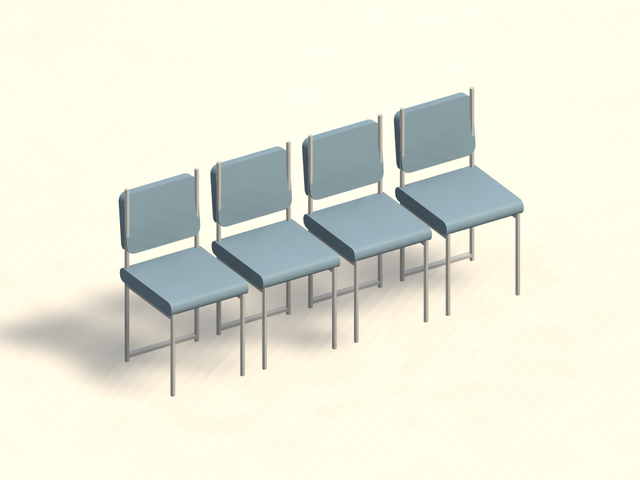
Row of chairs $400
Four stackable chairs. Flexible, but they feel less like a place of worship to some.
Footprint
2 × 1 m
Seats
4
Upkeep
$10 a year
Looks
3 / 10
The flexible, cheap seat: four seats for $400 against a pew's eight for $2,400. The seat of SGI, Chabad, a Reconstructionist synagogue, Chinmaya Mission, SRF, and the Nation of Islam's lecture hall, and loved by Pentecostals and Quakers; moderately formal traditions (a Reform synagogue, a Tibetan center, Methodists, the Salvation Army) take them as neutral; the most formal (a Zen center, a Conservative synagogue, Catholics, the Orthodox) mark them −1. A few at the back of a hall that sits on the floor serve those who can't. Chairs aren't cherished, so you can rearrange them freely.
Across the 80 traditions: suits 35, jars with 15, neutral to 30.